|
|
|
|
| Adam Carr's Election Archive
|
Victorian state election, 28 November 2026
Melbourne District
Location: Carlton, Kensington, North Melbourne
Legislative Council:
Northern Metropolitan Region
Enrolment 2022 election: 54,533
Enrolment June 2026: 55,758 (up 2.2%)
Relevant demographics (2021 census)
High income: 21.0% (Aust average 22.6%)
Renting: 67.3% (Aust average 30.6%)
Paying a mortgage: 45.0% (Aust average 35.0%)
Couples with children: 34.0% (Aust average 43.7%)
Born overseas: 52.9% (Aust average 27.7%)
Born in China: 11.4% (Aust average 2.3%)
Born in India: 6.2% (Aust average 2.8%)
Chinese speakers: 20.0% (Aust average 4%)
No religion: 51.0% (Aust average 38.9%)
Buddhism: 6.0% (Aust average 2.4%)
Hinduism: 6.0% (Aust average 2.7%)
University graduate: 53.7% (Aust average 26.3%)
Professional / managerial: 52.4% (Aust average 37.7%)
Note that this district contains large numbers of international students from China and India, who are counted in the census but are not citizens and not voters.
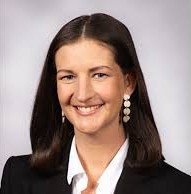
Sitting member: Ellen Sandell (Greens): Elected 2014, 2018, 2022
Leader of the Victorian Greens
2018 Greens majority over Labor: 01.3%
2021 redistricting: Greens majority over Labor: 01.7%
2022 Greens majority over Labor: 10.2%
Status: Safe Greens
The current electorate of Melbourne has existed since 1889 (there was an earlier multi-member seat of Melbourne between 1856 and 1859). At that time it included only the current central business district, but over successive redistrictings it expanded to take in the surrounding inner suburbs. When West Melbourne was abolished in 1904, it became a largely working-class seat, although East Melbourne remained an upper-income enclave, as it still is. From the 1970s, as manufacturing left the inner city area and took working-class voters with it, the seat has become increasingly populated by affluent professionals, and is today one of the most affluent areas in Victoria.
Melbourne first elected a Labor member in 1908. Labor then held the seat for 106 years, until the 2014 election. Barry Jones held Melbourne from 1972 to 1977 before moving to federal politics. Bronwyn Pike, who held it from 1999 to 2012, was a minister in the Bracks Government. Her resignation in 2012 caused a by-election, which was won by Labor's Jennifer Kanis.
Labor's primary vote in Melbourne fell from nearly 70% in 1988 to 35% in 2010, while the Greens vote rose from nothing to 33%. At the 2012 by-election, which the Liberals did not contest, the Greens overtook Labor's primary vote, and Labor won only with minority party preferences. At the 2014 election, Labor's vote fell to 30%, while the Greens polled over 40%, and Kanis was defeated by the Greens' Ellen Sandell.
Ellen Sandell, Greens MLA for Melbourne since 2014, was a policy adviser in the Victorian Office of Climate Change, and national director of the Australian Youth Climate Coalition, before her election.
Sandell has been leader of the Victorian Greens since April 2024.
Recent members have been Keith Remington (Labor) 1977-88, Neil Cole (Labor) 1988-99, Bronwyn Pike (Labor) 1999-2012, Jennifer Kanis (Labor) 2012-14, and Ellen Sandell (Greens) since 2014.
2022 results
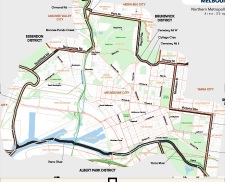 |
Boundaries following
2021 redistricting |
See full-size map
Candidates:
 |
 |
 |
 |
Edward Bode
One Nation |
Davydd Griffiths
Australian Labor Party |
Naomi Jones
Animal Justice Party |
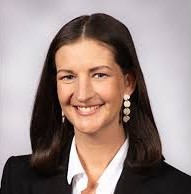
Ellen Sandell
Australian Greens |
 |
Jordan van den Lamb
Victorian Socialists |
Candidate websites
Edward Bode (One Nation)
Davydd Griffiths (Labor)
Naomi Jones (Animal Justice)
Ellen Sandell (Greens)
Jordan van den Lamb (Vic Socialists)
Back to main page
|
|