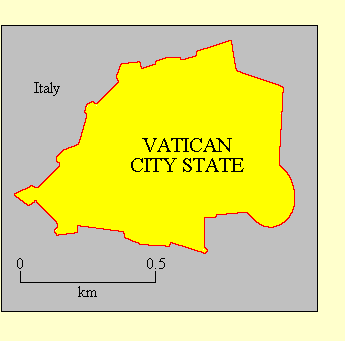
VATICAN CITY STATE
• Official name: Stato della Citta del Vaticano (Vatican City State). The state is often referred to as the Holy
See (Santa Sede), but this refers to the Pope and his government as they relate to the worldwide Catholic
Church, not in relation to the Vatican City State.
• Location: Western Europe
• International organisations: Organisation for Security and Co-operation in Europe
• Borders: Italy
• Coastline: None
• Land area: 0.4 Km2
• Population: about 1,000 at any one time. About 600 senior ecclesiatics hold Vatican citizenship
and travel on Vatican passports. The Vatican's other residents are citizens of other countries.
• Annual GDP (PPP) per capita: Not applicable
• Ethnicity: Most of the Vatican's employees are Italians.
• Languages: Latin is the official language, but Italian is the language of administration.
• Religion: All the Vatican's residents are Catholic Christians.
• Form of government: Theocracy
• Capital: None
• Constitution: The
Fundamental Law of the Vatican City State came into effect on 22 February 2001.
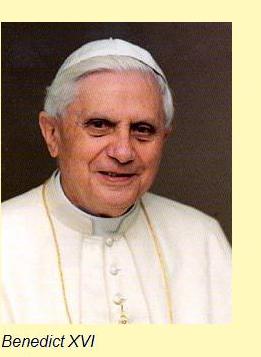
• Head of state: The Pope, chosen by the College of Cardinals for life, is the Sovereign of the Vatican City
State by virtue of holding the Papal office. Pope
Benedict XVI (Joseph Ratzinger), took office on 18 April 2005.
• Head of government: The President of the Governorate of Vatican City State, appointed by the Pope and
accountable to him. Cardinal Giuseppe Bertello has held
this post since 1 October 2011.
• Legislature: None
• Electoral authority: None
• Freedom House 2011 rating: no rating
• Transparency International Corruption Index: no rating
• Reporters Without Borders Press Freedom 2010 Index: no rating
• Heritage Foundation Economic Freedom 2010 Index: no rating
Political history
The Bishop of Rome, known as the Pope, acquired sovereignty over the city of Rome from the Byzantine Emperor in the 8th century, and the
Papal States extended over the centuries to include most of central Italy, a territory which by the 19th century
included 3 million people. The Papal government was corrupt, reactionary and inefficient, and most Italians
welcomed the overthrow of Papal power by Napoleon. The Pope was put back on his throne in 1815, but agitation for
Italian unification mounted steadily until most of the Papal States were seized by the Italians in 1859 and the
rest in 1861. The Pope retained the city of Rome until 1871 until it too was annexed by Italy. The Popes refused
to recognise the loss of the Papal States until 1929, when the Lateran Treaty between the Pope and Mussolini's
regime established the Vatican City State, covering the Vatican and a few other places. The Vatican is a fully sovereign state, but it is not a "country" in any meaningful sense. It has no
resident population other than employees of the Catholic Church and no political life. The Pope rules the state
as an absolute monarch, but he is ruling only his own employees, most of whom retain their citizenship of
other countries.
Updated November 2011
|