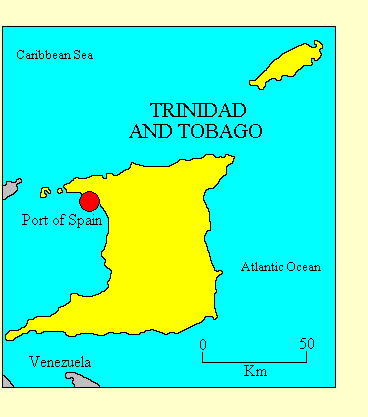
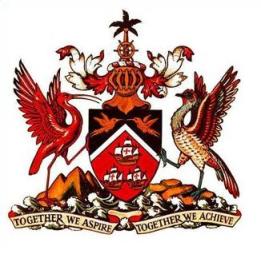
REPUBLIC OF TRINIDAD AND TOBAGO
• Official name: Republic of Trinidad and Tobago
• Location: Caribbean
• International organisations: African, Caribbean and Pacific Group of States, Commonwealth of
Nations, Non-Aligned Movement, Organisation of American States, United Nations, World Trade
Organisation
• Borders: None
• Coastline: Atlantic Ocean, Caribbean Sea
• Land area: 5,128 Km2
• Population: 1,300,000
• Annual GDP (PPP) per capita: US$23,100 (2009 CIA estimate). World ranking: 42
• Ethnicity: About 40% of the population are of Indian descent (known in Trinidad as East
Indians or Indo-Trinidadians), while 39% are of African descent. The rest are of mixed ancentry, and
there are small European and Chinese minorities.
• Languages: English is the official language and is generally understood. Hindi is also used.
• Religion: Christian 45% (Catholic 29%, Protestant 16%), Hindu 24%, Muslim 6%, other 25%
• Form of government: Parliamentary democratic republic. Barbados is
divided into eight counties and three municipalities. The island of Tobago has a special status.
• Capital: Port of Spain
• Constitution: The
Constitution of Barbados came into effect on 1 August 1976.
• Head of state: The president, chosen for a five-year term by both houses of the legislature. President
Maxwell Richards took office on 17 March 2003.
• Head of government: The Prime Minister, appointed by the President. The Prime Minister is the
leader of the largest party in the legislature and is accountable to it.
• Legislature: Trinidad and Tobago has a bicameral legislature, the
Parliament of the Republic of Trinidad and Tobago (website offline).
The House of Representatives has 41 members elected for five-year terms from single-member constituencies.
The Senate has 31 appointed members.
• Electoral authority: The Trinidad and Tobago Election and
Boundaries Commission conducts national elections. (This website gives contact details only.)
• Freedom House 2009 rating: Political Rights 2, Civil Liberties 2

Political history
Trinidad was discovered and named (after the Holy Trinity) by Columbus in 1498, and was settled by the Spanish
in 1532. It was seized by the British in 1797 and formally ceded to Britain in 1802. Tobago was settled by the
Dutch in 1623 but was abandoned by them in 1684, and came under British control in 1762. From 1781 to 1803 it was
held by the French. In 1833 both islands became part of the British colony of the Windward Islands. Trinidad
differed from the other islands in having large numbers of Indian workers, and their descendants now outnumber the
black population, although neither community is a majority of the population. In 1899 Trinidad and Tobago were
placed under a single governor, and in 1956 they were given internal self-government. They were part of the
Federation of the West Indies from 1958 to 1962, and then became independent. In 1976 Trinidad and Tobago became a
republic.
Politics in Trinidad are polarised along ethnic lines. They have been dominated since the 1950s by the
largely Afro-Trinidadian People's National Movement
(PNM), whose leader Eric Williams was the country's Prime Minister from 1956 to 1981. Since his death the PNM has
gradually declined, losing office in 1986 to the National Alliance for Reconstruction (NAR) led by A N R Robinson.
But the NAR split in 1986, with an Indian-dominated faction led by Basdeo Panday forming the
United National Congress, and the PNM returned to office in 1991 led by
Patrick_Manning. The UNC came to office in 1995, but there was a prolonged political crisis in 2000-2002, with two
deadlocked elections, before the PNM under Manning returned to power in 2002. His government was returned with an
increased majority in 2007. In 2010, however, the PNM was heavily defeated by an opposition coalition led by
Kamla Persad-Bissessar, who became the
country's first female Prime Minister.
Freedom House's 2009
report on Trinidad and Tobago
says: "Trinidad and Tobago is an electoral democracy. The November 2007 elections, in which Manning was
reelected president, were generally considered to be free and fair by observers. A Caribbean Community
(CARICOM) electoral observation mission reported that voting was orderly and peaceful, which represented a
marked reduction in tension compared to previous elections... Trinidad and Tobago is believed to suffer from
high levels of official corruption. An Integrity Commission, established under the 2000 Integrity in Public
Life Act, has the power to investigate the financial and ethical performance of public functionaries...
Trinidad and Tobago was ranked 72 out of 180 countries surveyed in Transparency International's 2008
Corruption Perceptions Index... Freedom of speech is legally guaranteed by the constitution. Press outlets are
privately owned and vigorous in their pluralistic views... Freedoms of association and assembly are respected...
The judicial branch is independent, though subject to some political pressure and corruption."
Updated June 2010
|