DEMOCRATIC REPUBLIC OF
SAO TOME AND PRINCIPE
• Official name: Republica Democratica de Sao Tome e Principe (Democratic Republic of Sao Tome and Principe)
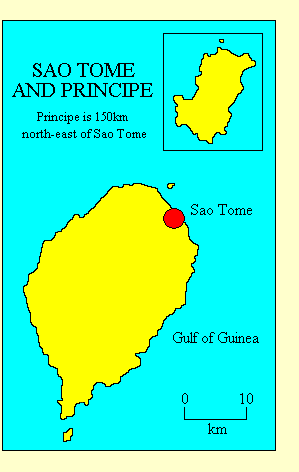
• Location: West Africa
• International organisations: African, Caribbean and Pacific Group of States, African Union,
Non-Aligned Movement, United Nations
• Borders: None
• Coastline: Gulf of Guinea
• Land area: 1,001 Km2
• Population: 163,000
• Annual GDP (PPP) per capita: US$1,700 (2009 CIA estimate). World ranking: 157
• Ethnicity: Most of the people of Sao Tome and Principe are of mixed African and Portuguese descent.
• Languages: Portuguese is the official language and the language of most of the population.
• Religion: Most of the population are nominal Catholic Christians.
• Form of government: Presidential republic
• Capital: Sao Tome
• Constitution: The Constitution of Sao Tome and Principe came into effect in March 1990.
• Head of state: The President, elected by direct universal suffrage for a five-year term.
• Head of government: The Prime Minister, appointed by the President, who also appoints the Cabinet.
• Legislature: Sao Tome and Principe has a unicameral legislature, the National Assembly (Assembleia Nacional), which
has 55 members elected for four-year terms by proportional representation from multi-member constituencies.
• Electoral authority: None known
• Freedom House 2009 rating: Political Rights 2, Civil Liberties 2
Political history
The islands of Sao Tome and Principe were uninhabiated when they were discovered by the Portuguese in the
1470s, and were settled by Portuguese slave-traders and sugar-growers. In 1522 Sao Tome officially became a
Portuguese colony, and Principe followed in 1558. The two islands became a single colony in 1753 and a
Portuguese overseas territory in 1951. The Liberation Movement of Sao Tome and Principe (MLSTP) was formed in
exile in 1959, but no progress towards independence was made until the revolution in Portugal in 1974. Sao
Tome and Principe became independent in July 1975.
The MLSTP ruled the country as a socialist one-party state until 1990, when the party gave up power
and a new constitution creating a multi-party system was enacted. Since then the MLSTP has alternated in power
with the Independent Democratic Action (ADI). The other significant party is the Forces for Change Democratic Movement (MDFM). The country has experienced political
instability, with several attempted coups and violent incidents, but democratic government has been preserved.
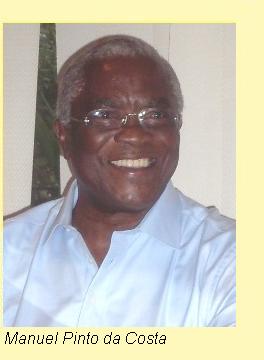
In 2011 the MLSTP returned to power when former president
Manuel Pinto da Costa was elected.
Freedom House's 2009 report on Sao Tome and Principe
says: "Sao Tome and Principe is an electoral democracy. Presidential and legislative elections held in 2006
were deemed credible, though there were reruns in a number of districts where balloting was disrupted...
The country's potential oil wealth has fueled growing corruption among members of the ruling elite...
The country was ranked 121 out of 180 countries surveyed in Transparency International's 2008 Corruption
Perceptions Index... Freedom of expression is protected by the constitution and respected in practice...
Freedoms of assembly and association are respected... The judiciary is independent, though occasionally
subject to manipulation."
Updated September 2011
|