
REPUBLIC OF RWANDA• Official name: Republika y'u Rwanda / Republic of Rwanda
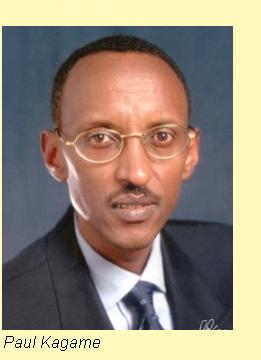
Before European occupation, Rwanda had been ruled by the Tutsi minority, who kept the Hutu majority in serfdom. The democratic constitution left by the Belgians gave political power to the Hutu, but the Tutsi did not accept this loss of their traditional authority. Ethnic violence periodically broke out, and in 1973 an army coup installed Juvenal Habyarimana, a Hutu, in power, which he retained through the usual African one-party state system until 1991, when he agreed to the re-establishment of a multi-party system. The resumption of political life, however, re-awakened conflict between the Hutu and the Tutsi minority, who had retained much of their economic power. When Habyarimana was assassinated in 1994, a Hutu party, the Rwanda Patriotic Front, seized power and a one-sided civil war broke out, in which up to 500,000 Tutsi were massacred by Hutu militia, supported by many politicians and Catholic clergy. This led to UN-approved intervention by French troops and thus to the 1993 Arusha peace accord. Following the establishment of a transitional government under UN supervision, Paul Kagame, a Tutsi, became interim president. Kagame was confirmed in office in rather one-sided but apparently reasonably fair presidential elections in August 2003. Kagame has since entrenched himself in power, helped by a weak legislature and party system. At the 2008 legislative election his Rwandan Patriotic Front won 78% of the vote and most of the seats. He will seek re-election in August 2010. Freedom House's 2009 report on Rwanda says: "Rwanda is not an electoral democracy. International observers have noted that the 2003 presidential and 2003 and 2008 parliamentary elections, while administratively acceptable, presented Rwandans with only a limited degree of political choice... The constitution officially permits political parties to exist, but only under certain conditions, and the constitution's emphasis on "national unity" has the effect of limiting political pluralism... The government has undertaken a number of anticorruption measures, but graft represents a significant problem... Rwanda was ranked 102 out of 180 countries surveyed in Transparency International's 2008 Corruption Perceptions Index... The RPF has imposed a number of legal restrictions and informal controls on the media, and press freedom groups have accused the government of intimidating independent journalists... Although the constitution codifies freedoms of association and assembly, in reality these rights are limited... The judiciary has yet to secure full independence from the executive. Nevertheless, a 2008 report by Human Rights Watch noted some recent improvements in the judicial system." Updated July 2010 |