REPUBLIC OF PERU• Official name: Republica del Peru (Republic of Peru)
In the early 20th century, the liberal president Augusto Leguia y Salcedo broke the power of the old oligarchy and carried out many reforms. But Peru's progressive era ended with the Depression and a coup in 1932. Coups and social conflict continued through the 1940s and 50s. Another liberal president, Fernando Belaunde Terry, was elected in 1963, and introduced some reforms. But Belaunde was deposed by the army in 1968, and a radical junta led by General Velasco Alvarado initiated a far-reaching program of agrarian reform and nationalisation. 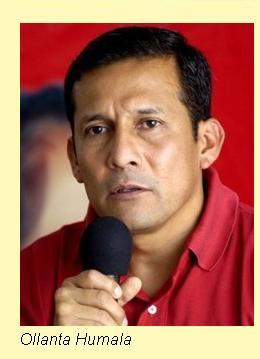
Velasco's radical regime ended in another coup in 1975, and in 1980 democratic government was restored and Belaunde re-elected President. He was succeeded by a radical populist, Alan Garcia Perez, who almost bankrupted the country, and then by an authoritarian conservative, Alberto Fujimori, who dissolved Congress and ruled by decree before being forced to resign in 2000. Peru's communist insurgency was broken by Fujimori's tough measures, though its remnants continue to engage in drug trafficking and violence in remote areas. Peru's democratic institutions survived these dramas and the election of Alejandro Toledo, a President of Amerindian descent, seemed to mark the beginning of a new progressive era. The 2006 election saw a contest between a chastened Garcia and a radical leftist, Ollanta Humala, which Garcia won. The 2011 election saw a contest between a more moderate Humala and Fujimori's daughter Keiko, with Humala winning a very narrow victory. Like most Latin American countries Peru has a weak party system. The traditional party of the radical left, the American Revolutionary People's Alliance, was weakened by the debacle of the first Garcia presidency. Humala's Peruvian Nationalist Party (PNP) now represents the rural indigenous poor. The Union for Peru is the main liberal party. Freedom House's 2011 report on Peru says: "Peru is an electoral democracy. Elections in 2006 were generally free and fair, according to international observers. Complaints focused on poor logistics and information distribution in rural areas, as well as the disenfranchisement of the roughly one million Peruvians who lacked identification documents... Corruption is a serious problem. Checks on campaign financing are weak, particularly at the local level, where drug traffickers’ influence is perceived to have grown in recent years. Public officials and judges are often dismissed or investigated for graft, and Congress is considered the most corrupt institution... The lively press is for the most part privately owned. Officials and private actors sometimes intimidate or even attack journalists in response to negative coverage... The constitution provides for the right to peaceful assembly, and the authorities uphold this right for the most part... The judiciary is widely distrusted and prone to corruption scandals. While the Constitutional Court is relatively independent, its autonomy has undergone a mix of setbacks and advances in recent years, and it has produced inconsistent jurisprudence on important issues... Discrimination against the indigenous population remains pervasive. Updated November 2011 |