REPUBLIC OF NAURU
• Official name: Republic of Nauru
• Location: Pacific Ocean
• International organisations: African, Caribbean and Pacific Group of States, Commonwealth of Nations,
Pacific Islands Forum, United Nations, World Trade Organisation
• Borders: None
• Coastline: Pacific Ocean
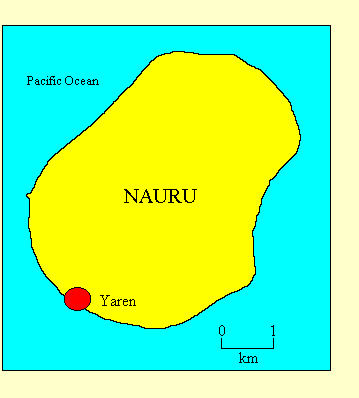
• Land area: 21 Km2
• Population: 10,000
• Annual GDP (PPP) per capita: US$5,000 (2009 CIA estimate). World ranking: 114
• Ethnicity: The Nauruans, a Polynesian people, make up 58% of the population. The remainder are people from other
Pacific states, Chinese and Europeans.
• Language: Nauruan is the official language but English is widely understood and is the language of business and
administration.
• Religion: Most Nauruans are Christians, about two-thirds being Protestants and the remainder Catholics.
• Form of government: Presidential democratic republic.
• Capital: Yaren
• Constitution: The
Constitution of Nauru came into effect on 29 January 1968.
• Head of state: The President, chosen by the legislature from among its own members for a three-year term.
• Head of government: The President, who appoints all ministers.
• Legislature: Nauru has a unicameral legislature, the Parliament of Nauru,
which has 18 members, elected from multi-member constituencies for three-year terms.
• Electoral authority: None known
• Freedom House 2011 rating: Political Rights 1, Civil Liberties 1
• Transparency International Corruption Index: no rating given (corruption is a serious problem.)
• Reporters Without Borders Press Freedom 2010 Index: no rating given
• Heritage Foundation Economic Freedom 2010 Index: no rating given
Political history
Nauru was discovered by an American seaman, Captain John Fearn, in 1798, but was such a small and remote place that
it escaped the attention of the imperial powers until 1888, when its valuable phosphate deposits led to its annexation
by Germany. It was administered as part of the German Marshall Islands until 1906, when it was transferred to German
New Guinea. In 1914 it was occupied by Australian troops, and in 1920 it became a joint League of Nations mandate of
Australia, New Zealand, and Britain, although Australia actually administered the island. It was occupied by the Japanese
from 1942 to 1945, then administered again by Australia as a United Nations trust territory until independence in 1968.
Nauru's prosperity
seemed assured due to the huge royalities paid by mining companies who exploited the island's phosphate reserves.
Unfortunately the islanders wasted most of the money on expensive imported goods and poor investments in Australian
real estate, and by the 1990s the phosphate was exhausted and the island was bankrupt. The end of phosphate mining caused a significant
fall in population. Nauru, with 10,000 people, is the smallest sovereign state in the world apart from the Vatican.
Nauru is now heavily dependent on Australian aid and its future as a viable state is in doubt.
Nauru is a parliamentary democracy but has no formal party system. In its early years it was dominated by its founding president Hammer de Roburt, but since
his death in 1992 the country has suffered from a series of weak governments, with presidents coming and going in rapid succession as a
result mainly of personal rivalries. Marcus Stephen became President in December 2007. Nauru's instability continued in 2010,
with successive elections in April and June producing a continuing deadlock between supporters and opponents of President
Stephen's government. In November 2011 Stephen resigned following allegations of corruption, and was succeeded by
Frederick Pitcher. Five days later, however, the defection of one member of Parliament saw Pitcher voted out of office,
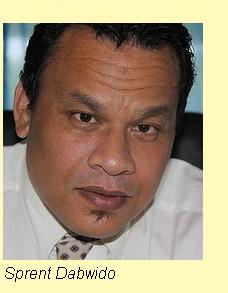
and replaced by Sprent Dabwido.
Updated November 2011
|