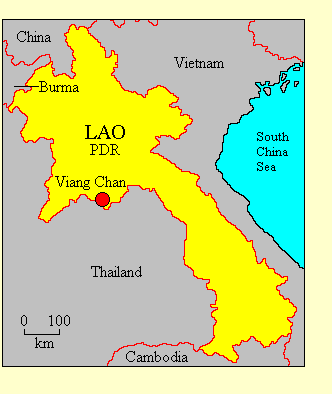
LAO PEOPLE'S DEMOCRATIC REPUBLIC• Official name: Sathalanalat Paxathipatai Paxaxon Lao (Lao People's Democratic Republic, commonly
called the Lao PDR). Lao people dislike the French form "Laos", which they pronounce without the "s."
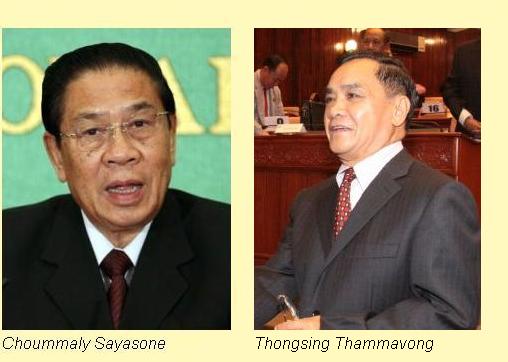
The French re-established control, recognising an independent Lao kingdom within the French Community. The communist-controlled Pathet Lao movement, supported by the Vietnamese communists, launched armed resistance to the French. In 1953 the French withdrew, leaving the Lao monarchists to fight the communists. In 1960 the United States stepped in to replace France as the protector of the Lao government. An attempt to create a neutralist coalition government broke down in 1965 and fighting resumed. The war continued intermittently until 1973, when a ceasefire was followed by the creation of a coalition government. In 1975, following the communist victory in Vietnam, the Pathet Lao led by Kaysone Phomvihane took full control and the monarchy was abolished. The communist Lao People's Revolutionary Party (LPRP) has held a monopoly of power ever since. For most of its history the LPRP has been to a large extent a subsidiary of the Vietnamese communist party, but in recent years Chinese influence has grown rapidly. Since the death of Kaysone Phomvihane in 1992, there has been some limited economic reform, in particular the opening up to Thai and other foreign investment, and more recently to tourism. This has lifted living standards in urban areas. Although there has been no political reform, there has been considerable relaxation of the party's supervision of the people's daily lives. The current party leader is Choummaly Sayasone, who became President of the Lao PDR in March 2006. Prime Minister Bouasone Bouphavanh was forced to resign in December 2010, apparently because of resistance from the LPRP to his efforts to stamp out corruption. He was replaced by a conservative, Thongsing Thammavong Freedom House's 2009 report on the Lao PDR says: "[The Lao PDR] is not an electoral democracy. The 1991 constitution makes the LPRP the sole legal political party and grants it a leading role at all levels of government. The LPRP vets all candidates for election to the rubber-stamp National Assembly, whose 115 members elect the president... Corruption and abuses by government officials are widespread. Official announcements and new laws aimed at curbing corruption are rarely enforced. [The Lao PDR] was ranked 151 out of 180 countries surveyed in Transparency International's 2008 Corruption Perceptions Index... Freedom of the press is severely restricted [and] The state owns all media... The government severely restricts freedom of assembly... The courts are corrupt and controlled by the LPRP. Long delays in court hearings are common, particularly for cases dealing with public grievances and complaints against government abuses." Updated March 2011 |