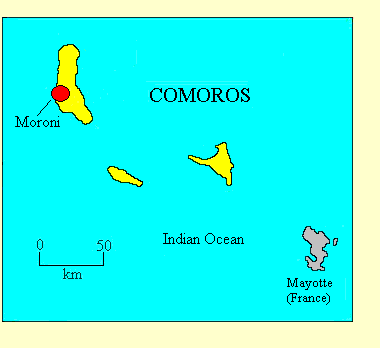
UNION OF THE COMOROS
• Official name: Union des Comores, Juzur al-Qumur (Union of the Comoros)
• Location: Southern Africa
• International organisations: African, Caribbean and Pacific Group of States, African Union,
Non-Aligned Movement, Organisation Internationale de la Francophonie, Organisation of Islamic
Conference, United Nations.
• Borders: None
• Coastline: Indian Ocean
• Land area: 2,170 Km2
• Population: 800,000
• Annual GDP (PPP) per capita: US$1,000 (2009 CIA estimate). World ranking: 176
• Ethnicity: The people of the Comoros are mostly of mixed African and Arab descent.
• Languages: Arabic and French are the official languages, but most of the population speaks Comorean, also
known as Comoros Swahili, Shikomoro or Shingazidja.
• Religion: Almost the entire population are Sunni Moslems.
• Form of government: Presidential democratic republic. The three islands that make up the Comoros,
Grande Comore (Njazidja), Anjouan (Nzwani), and Moheli (Mwali), have their own legislatures and considerable
autonomy, although this was reduced by the constitutional changes of 2009.
• Capital: Moroni
• Constitution: The Constitution of the
Union of the Comoros came into effect on 23 December 2001. It was substantially amended in
May 2009.
• Head of state: The President, elected by direct universal suffrage for a four-year
term.
• Head of government: The President, who appoints the ministers.
• Legislature: The Comoros has a unicameral legislature, the Assembly of the Union, which
has 33 members, elected for five-year terms, or whom 24 are elected from single-member
constituencies and nine are chosen by legislative assemblies of the three islands.
• Electoral authority: The National Election Commission administers national elections. The
Commission does not have a website.
• Freedom House 2011 rating: Political Rights 4, Civil Liberties 4
• Transparency International Corruption Index: 21% (154 of 178 countries rated)
• Reporters Without Borders Press Freedom 2010 Index: 81% (70 of 178 countries rated)
• Heritage Foundation Economic Freedom 2010 Index: 43.8% (167 of 179 countries rated)
Political history
The Comoros were brought under French control in 1886 and were formally annexed in 1912. The were
administered from Madagascar until 1946, when they became a French overseas territory. In 1973 an agreement
was reached with France for independence, but the island of Mayotte objected to rule by the larger islands.
After a prolonged dispute, the country became independent minus Mayotte, which remains a French territory
subject a territorial claim by the Comoros.
Since independence the Comoros have been racked by instability, seeing frequent coups and attempted coups, some
carried out by mercenaries backed by South African and French economic interests. President Ali Soilih was
assassinated in 1978, and Ahmed Abdallah established a military regime. Abdallah was killed in another coup
in 1989, after which Said Mohamed Djohar became President. Another coup attempt in 1995, led by mercenaries,
provoked French intervention. A new constitution was drawn up, but in 1999 yet another coup brought Azali
Assoumani to power.
Since 2002 the Comoros have once again had constitutional government, under a decentralised system
which gives greater powers to the three island assemblies. Azali Assoumani won reasonably fair presidential
elections in April 2002, and legislative elections in 2004 saw his supporters defeated in a free election.
In 2006 Ahmed Abdallah Sambi was elected president in a free election. In 2007 a separatist group seized control of
Anjouan, requiring African Union intervention to restore order. As a result a constitutional referendum was
held in 2009, changing the constitution to strengthen the central government. At the 2009 legislative elections,
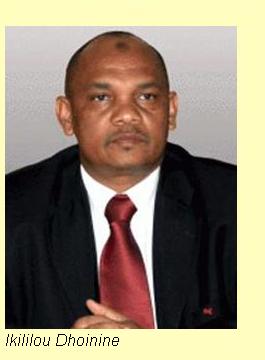
President Sambi's supporters won a comfortable majority. In 2011
Ikililou Dhoinine was elected President.
Freedom House's 2011
report on the Comoros
says: "Comoros is an electoral democracy. Since 1996, Comorans have voted freely in several parliamentary and
presidential elections... Corruption remains a major problem... The constitution and laws provide for freedom
of speech and of the press, but in the past authorities have arrested journalists, seized newspapers, and
silenced broadcast outlets for reports that are found to be objectionable. These practices are less common
under the current administration... The government typically upholds freedoms of assembly and association...
The judicial system is based on both Sharia (Islamic law) and the French legal code and is subject to influence
by the executive branch and other elites."
Updated November 2011
|