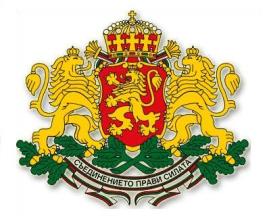
REPUBLIC OF BULGARIA
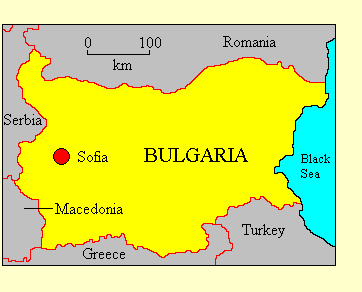
• Official name: Republika Bulgarija (Republic of Bulgaria)
• Location: Eastern Europe
• International organisations: Council of Europe, North Atlantic Treaty Organisation, Organisation for Security and Co-operation in Europe, United
Nations, World Trade Organisation
• Borders: Greece, Macedonia, Romania, Serbia, Turkey
• Coastline: Black Sea
• Land area: 110,910 Km2
• Population: 7,600,000 (in 1989 there were 9 million)
• Annual GDP (PPP) per capita: US$12,600 (2009 CIA estimate). World ranking: 70
• Ethnicity: Bulgarian 83.6%, Turkish 9.5%, Roma 4.6%, other 2.3%
• Languages: Bulgarian is the official language and is generally understood.
Turkish is spoken in Turkish minority areas.
• Religion: Christian 85.0% (Orthodox 83%, Catholic 2%), Sunni Moslem 12%
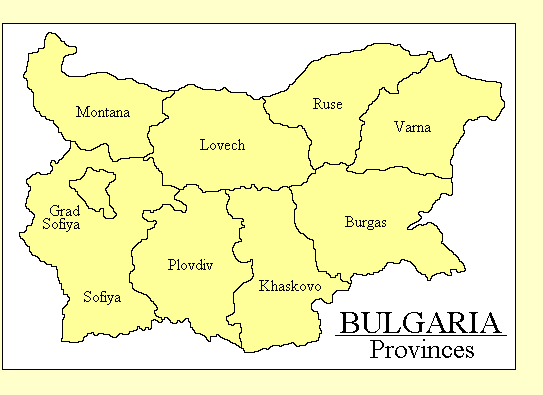
• Form of government: Parliamentary democratic republic. Bulgaria is divided into
nine provinces.
• Capital: Sofia
• Constitution: The
Constitution of the Republic of Bulgaria came into effect on 12 July 1991.
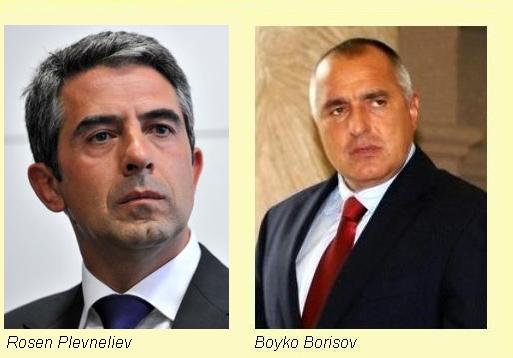
• Head of state: The President, elected by direct universal suffrage for a
five-year term. The President's functions are largely ceremonial. President
Rosen Plevneliev took
office on 22 January 2012.
• Head of government: The Prime Minister, appointed by the President. The Prime Minister
is the leader of the largest party in the legislature and is accountable to it.
• Legislature: Bulgaria has a unicameral legislature. The
National Assembly has 240 members,
elected for four-year terms by proportional representation from multi-member
constituencies.
• Electoral authority: The
Bulgarian Central Election Commission conducts national elections. (The CIK has no
fixed website but creates a new one for each election.)
• Freedom House 2011 rating: Political Rights 2, Civil Liberties 2
• Transparency International Corruption Index: 36% (73 of 178 countries rated)
• Reporters Without Borders Press Freedom 2010 Index: 81.0% (70 of 178 countries rated)
• Heritage Foundation Economic Freedom 2010 Index: 64.9% (60 of 179 countries rated)
Political history
The mediaeval Bulgarian state was overrun by the Ottomans in 1396, and a Bulgarian
state did not re-emerge until the 19th century. After Ottoman massacres of Bulgarian
nationalists, the great powers forced the Ottomans to withdraw, and in 1879 Bulgaria
became an autonomous principality, with Alexander of Saxe-Coburg-Gotha as prince. In
1907 Bulgaria became a fully independent kingdom.
Bulgaria was a German ally in the First World War, and after the war the Agrarian
Party came to power on a policy of radical reform. In 1923 the army seized power and
the Agrarian leader Alexander Stamboliyski was assassinated. In the 1930s King Boris
established a royal dictatorship and led Bulgaria into the Second World War as a
German ally.
Bulgaria was occupied by the Soviet Union in 1944, and in 1946 young King
Simeon was forced into exile and a Communist government was installed. The Communists
held power until 1991, when free elections were held in wake of the collapse of the
Soviet Union and its local allies. During the 1990s the reformed Communists, the
Bulgarian Socialist Party (BSP), alternated in office with the
anti-Communist Union of Democratic Forces (ODS). The
Movement for Rights and Freedoms represents the
Turkish-speaking minority.
In 2000 former King Simeon returned to Bulgaria to enter politics under
the name Simeon Saxecoburgotski. His party, the National
Movement for Simeon the Second swept to power in the 2001 elections, but was no more
successful than its predecessors at dealing with Bulgaria's declining population,
weak economy and entrenched corruption. The Socialists under Sergei Stanishev returned to
power in 2005.
At the 2009 election a new populist-conservative party,
Citizens for European Development of Bulgaria, led by Sofia
mayor Boyko Borisov, swept aside the
old parties and Borisov formed a new government. The extreme right-wing
Attack party, which engages in racist polemic against the
Turkish, Roma and Jewish minorities, gained 9% of the vote.
Freedom House's 2011
report
on Bulgaria says: "Bulgaria is an electoral democracy... Corruption is a serious concern
in Bulgaria. The European Commission's July 2010 progress report hailed the GERB
government's 'strong reform momentum,' but warned that major substantive improvements were
still necessary... Bulgarian media have benefited from significant foreign investment, but
political and economic pressures sometimes lead to self-censorship... The authorities
generally respect the constitutional freedoms of assembly and association...
Bulgaria's judiciary has benefited from a series of structural reforms associated with EU
accession. However, the July 2010 European Commission report urged the government to push
forward with a judicial reform strategy unveiled in June, noting that increased police and
prosecutorial efforts to combat corruption and organized crime had often foundered in the
courts."
Updated January 2012
|