

PEOPLE'S REPUBLIC OF BANGLADESH
• Official name: Gana Prajatantri Bangladesh (People's Republic of Bangladesh)
• Location: South Asia
• International organisations: Commonwealth of Nations, Non-Aligned Movement, Organisation of Islamic Conference,
United Nations, World Trade Organisation.
• Borders: Burma, India
• Coastline: Bay of Bengal
• Land area: 144,000 Km2
• Population: 162,200,000
• Annual GDP (PPP) per capita: US$1,600 (2009 CIA estimate). World ranking: 161
• Ethnicity: Virtually the entire population is Bengali.
• Languages: Bengali is the official language and universally spoken.
• Religion: Sunni Muslim 83%, Hindu 16%, other 1%
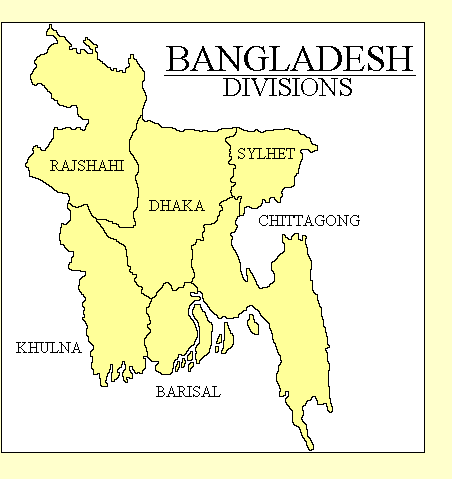
• Form of government: Parliamentary democratic republic. Bangladesh is divided into six divisions.
• Capital: Dhaka
• Constitution: The Constitution
of the People's Republic of Bangladesh came into effect 4 November 1972. It was
suspended 1982-86.
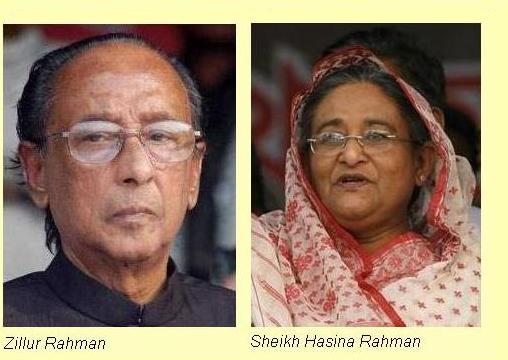
• Head of state: The President, elected by the National Assembly for a five-year term. The President's duties are
largely ceremonial. The present incumbent, Zillur Rahman, took office
on 12 February 2009.
• Head of government: The Prime Minister, appointed by the President, is usually the leader of the largest party in the National Assembly and accountable to it.
• Legislature: The Jatiya Samsada (National Parliament) is a unicameral legislature, with 300 members elected for five-year terms in single-member constituencies.
• Electoral authority: The Bangladesh Election Commission administers national elections.
• Freedom House 2011 rating: Political Rights 3, Civil Liberties 4
• Transparency International Corruption Index: 24% (134 of 178 countries rated)
• Reporters Without Borders Press Freedom 2010 Index: 42.5% (126 of 178 countries rated)
• Heritage Foundation Economic Freedom 2010 Index: 53.0% (130 of 178 countries rated)
Political history
Bangladesh was first part of British India (when it was known as East Bengal) and then from 1947 was the province of
East Pakistan. In 1971 following the fall of the Pakistani military regime
free elections were held and the secessionist party of Sheikh Mujibur Rahman swept the eastern province. This provoked a
civil war which ended with military intervention by India.
Since independence Bangladesh, the world's poorest large country, has been plagued by instability. Rahman was
assassinated during a military coup in 1975 and there was a second coup in 1982.
Constitutional government was restored in 1991, but Bangladeshi politics have been bedevilled by the intense hostility
between Sheikh Hasina Rahman, the daughter of Mujibur Rahman and
leader of the the Bangladesh Awami League (BAL), and
Begum Khalida Zia, widow of Zia ur Rahman, military ruler from 1977 to 1981, and leader of the Bangladesh
Nationalist Party (BNP). The antipathy between these
two dynastic party leaders is legendary, and neither has been prepared to accept the results of elections when they
lose.
In 2006 the army deposed Khalida Zia and appointed a caretaker government to root out corruption and organise
new elections. These took place in December 2008 and resulted in a landslide win for the BAL and its allies. The BAL is in
theory a socialist party but now standing mainly for family tradition. The BNP is more conservative and more inclined to
appease Islamist sentiment. The islamist Jamaat-e-Islami Bangladesh is allied
with the BNP but is not a major force.
Freedom House's 2011 report on
Bangladesh says: "Bangladesh is an electoral democracy. The December 2008 parliamentary elections were deemed free and fair
by European Union observers and other monitoring groups... A series of 2008 electoral reforms mandated that parties disband their student,
labor, and overseas units; obliged parties to reserve a third of all positions for women; reduced the number of seats a parliamentary
candidate could simultaneously contest from five to three; tripled campaign spending limits to 1.5 million taka ($22,000) per candidate;
and gave voters in each constituency the option of rejecting all candidates. The new regulations were designed to curtail the widespread
bribery, rigging, and violence that had characterised past elections... Endemic corruption and criminality, weak rule of law, limited
bureaucratic transparency, and political polarisation have long undermined government accountability...
Transparency International noted in 2008 that although the CG's efforts had effectively reduced large-scale corruption, graft and bribery
on a smaller scale remained rampant...
Bangladesh's media environment opened up considerably in 2009, and news outlets remained relatively unfettered in 2010 despite some
signs of intolerance by the government... The rights of assembly and association were restored in late 2008 with the lifting of emergency regulations...
Politicisation of the judiciary remains a concern. The military-backed caretaker government, unlike previous governments, worked to
implement a 1999 Supreme Court directive ordering the separation of the judiciary from the executive. In 2007, the power to appoint
judges and magistrates was transferred from the executive branch to the Supreme Court."
Updated October 2011
|