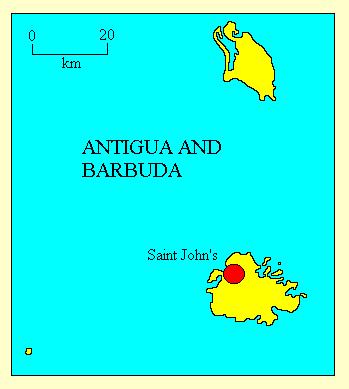

ANTIGUA AND BARBUDA
• Official name: Antigua and Barbuda
• Location: Caribbean
• International organisations: African, Caribbean and Pacific Group of States, Commonwealth of Nations,
Organisation of American States, United Nations, World Trade Organisation
• Borders: None
• Coastline: Caribbean Sea
• Land area: 443 Km2
• Population: 85,000
• Annual GDP (PPP) per capita: US$18,100 (2009 CIA estimate). World ranking: 51
• Ethnicity: The great majority of the population are of African descent. There are
small minorities of Europeans and Lebanese.
• Languages: English is the official language and is generally understood. Most of the
population speak a dialect called Antigua Creole.
• Religion: Most of the population are Protestant Christians.
• Form of government: Constitutional monarchy and parliamentary democracy. Antigua is
divided into six parishes. Barbuda and Redonda each constitute one parish.
• Capital: Saint John's
• Constitution: The
Constitution of Antigua and Barbuda came into effect on 31 October 1981.
• Head of state: Queen Elizabeth II, Queen of Antigua and Barbuda. The Queen came to
the British throne on 6 February 1952, and has held the title
Queen of Antigua and Barbuda since 31 October 1981. The Queen's functions in
Antigua and Barbuda are excercised by a Governor-General, appointed by the Queen on
the advice of the Prime Minister. The current Governor-General,
Dame Louise Lake-Tack, took office on 17 July 2007.
• Head of government: The Prime Minister, appointed by the Governor-General. The Prime Minister is the
leader of the largest party in the legislature and is accountable to it.
• Legislature: Antigua and Barbuda has a bicameral legislature, the
Parliament. The
House of Representatives has 19 members, 17 elected for five-year terms from
single-members constituencies and three ex officio members. The Senate has 17
appointed members.
• Electoral authority: Elections are conducted by the Antigua and Barbuda Electoral Commission.
Information on elections in Antigua and Barbuda can also be found at the Antigua Elections website.
• Freedom House 2011 rating: Political Rights 3, Civil Liberties 2
• Transparency International Corruption Index: no rating given
• Reporters Without Borders Press Freedom 2010 Index: 83.5 (57 of 178 countries rated)
(this is a group rating for the Organisation of Eastern Caribbean States)
• Heritage Foundation Economic Freedom 2010 Index: no rating given.

Political history
Antigua was discovered and named by Columbus in 1493, but it was Britain that
colonised the islands in 1632. British sugar planters imported African slaves, and
people of African descent soon constituted most of the population. Slavery was
abolished in 1834 but the white planters continued to rule the islands. Legislative
institutions were introduced in 1946 and internal self-government in 1958. Following the
failure of the West Indies Federation, Antigua and Barbuda became a British Associated
State, with full independence following in 1981.
Antiguan politics were dominated for many years by the Antigua Labor Party, under Sir
Vere Bird and his son Lester Bird, who ran the country from 1958 to 2004 with one break (1971-76), despite
many allegations of corruption against the ruling party. The opposition United Progressive Party finally broke the Bird family's
dominance in March 2004, however, when it won a convincing victory under Baldwin Spencer.
The UPP government was re-elected in 2009.
Freedom House's 2011 report on Antigua and Barbuda says:
"Antigua and Barbuda is an electoral democracy... The government has overseen the enactment of anticorruption and transparency legislation in recent years, but implementation has been slow...
Antigua and Barbudagenerally respects freedom of the press, but in practice media outlets are concentrated among a small number of firms...
In recent years, the courts have increasingly asserted independence through controversial decisions against the government."
Updated October 2011
|